
Loading Day — 2 Sets of 3×18m, 80-Ton Split-Type Weighbridges Headed to Europe

Two sets of 80-ton weighbridges left our yard this week, each one a 3-meter by 18-meter platform, both headed to a customer in Europe. I want to actually walk through why this particular order looked the way it did, because the specs behind it explain a few things about split-type weighbridge design that don't usually come up unless you're the one loading the container.
Why split-type, and why it matters more than people realize
An 18-meter platform doesn't fit into a standard shipping container in one piece — a standard 40-foot container runs about 12 meters internally, so a single-piece 18-meter platform simply isn't an option for containerized ocean freight regardless of how the rest of the logistics gets planned. That's the actual reason split-type, or modular, weighbridge construction exists for longer platforms headed overseas: the platform gets engineered and fabricated as several structurally independent sections that bolt together on-site into one continuous weighing surface, rather than as a single welded unit that would need oversized flatbed transport or specialized shipping arrangements at a much higher cost.
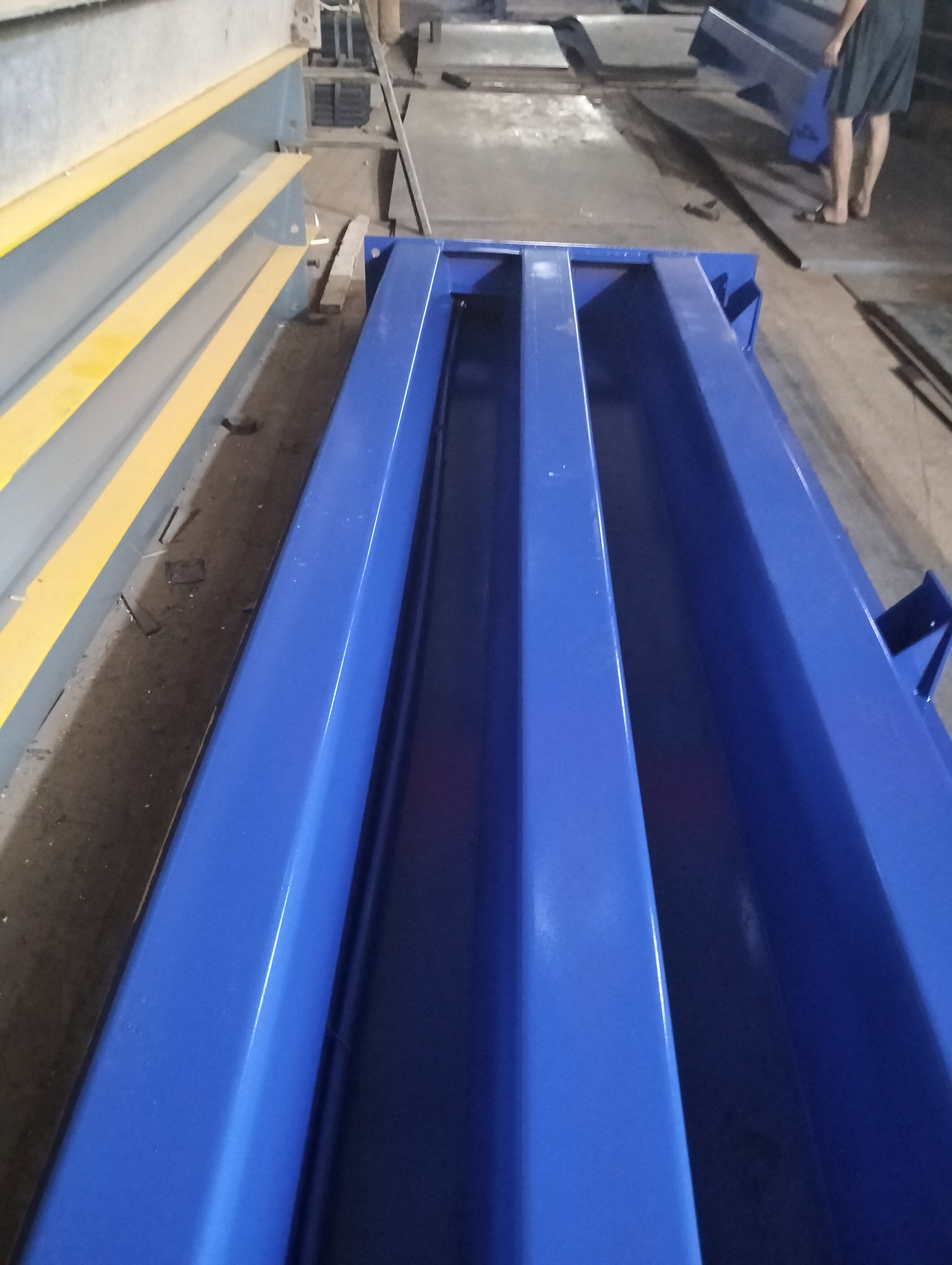
For this customer, that meant each 18-meter platform was built as multiple sections, precision-matched so the joints align correctly and the whole assembly performs as a single accurate weighing surface once it's bolted together on-site rather than as several separate pieces with alignment gaps or load-distribution inconsistencies at the seams.

What went into these specifically
80-ton capacity across a 3×18m platform puts these solidly in the heavy commercial and industrial range — long enough to handle full combination vehicles, rated for consistent heavy freight rather than light delivery traffic. Full welded steel construction on each section, load cells matched and calibrated as a complete set before anything gets crated, so the sections arrive already characterized as parts of one system rather than needing full recalibration from scratch after assembly on-site.
Every load cell and every section goes through testing before it's cleared for packing — this isn't different for an export order versus a domestic one, which is worth saying because we get asked sometimes whether export orders get the same scrutiny as local ones. They do. The cell testing, the structural checks, the welding inspection — none of that changes based on where the crate is headed.
Getting it into the container
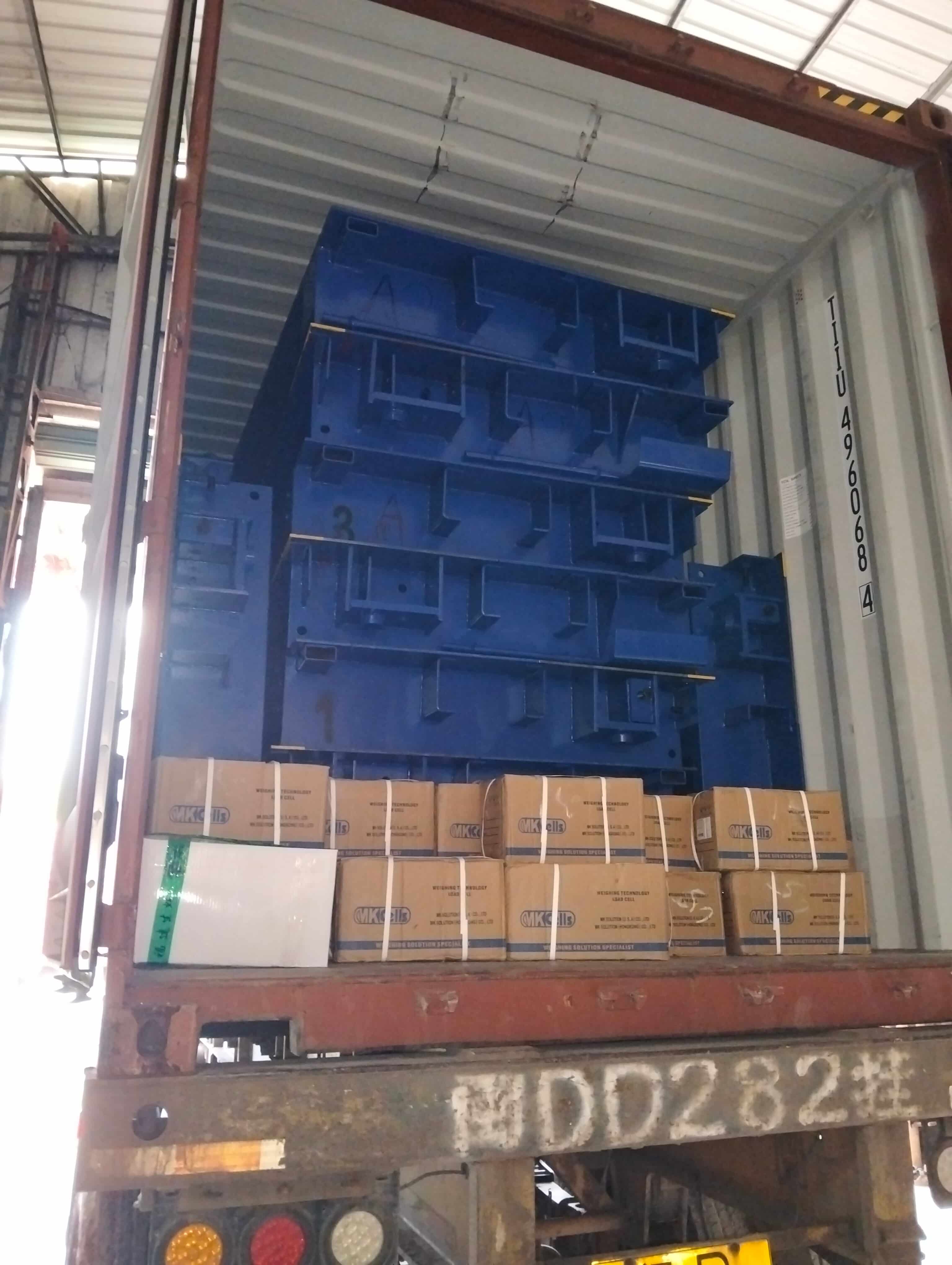
This is the part that doesn't show up on a spec sheet but genuinely matters for how smoothly an installation goes later. Loading sequence, weight distribution inside the container, and protecting the load cells and sensitive components during transit all take actual planning, not just fitting pieces into available space. A load cell that arrives with shipping damage because it wasn't packed and secured properly is a problem that shows up at commissioning, months after the fact, and is a lot more expensive to fix on-site than to prevent at the loading stage.

Documentation that travels with the shipment
Every section ships with its own calibration and test records, and the full set of assembly drawings goes with the shipment so the installation team on the receiving end has exact instructions for how the sections align and connect — which bolts, which torque specifications, which sequence. This matters more for split-type platforms than single-piece ones, since installation quality on a multi-section platform depends heavily on the sections going together correctly, not just being placed roughly in the right spot.

Why we're posting this
Partly because loading day is genuinely satisfying to document after weeks of fabrication and testing, and partly because a lot of people asking about weighbridges for export don't have a clear picture of what "split-type for shipping" actually involves until they see it — it's not a compromise version of a single-piece platform, it's a specific engineering approach built around the real constraints of getting an 18-meter structure across an ocean in a standard container.
We're Fujian Fangda Weighbridge, based in Fujian, China, and this is roughly what a heavy-capacity export order looks like end to end on our side — design for the actual shipping constraints, fabricate and test every section to the same standard as a domestic order, and document it thoroughly enough that installation on the other end goes the way it's supposed to the first time.
If you're planning a weighbridge order that needs to ship internationally and want to understand how platform length and container logistics actually interact before you finalize a design, that's a conversation worth having early — it changes the platform design, not just the shipping arrangement.
英文表单
NAME :*
TEL :*
E-MAIL*
Describe the requirements:*


