


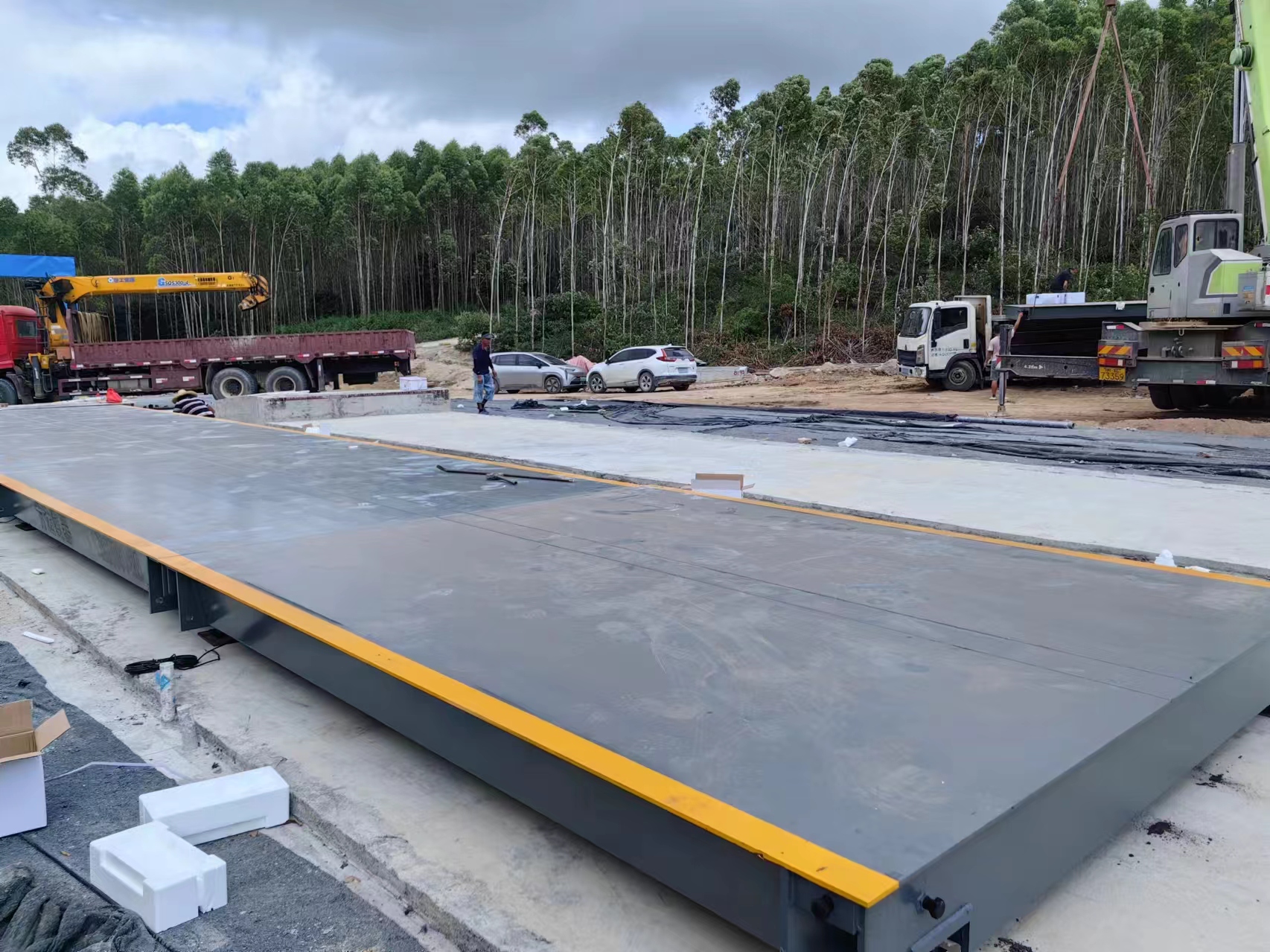
3 × 18 m 80-100 Ton Electronic Weighbridge & Truck Scales
Fangda 3×18m electronic weighbridge with 80–100 ton capacity for truck weighing. U-Beam steel platform, load cell options, pit or pitless installation, and customized weighing solutions.
3 × 18 m 80–100 Ton Electronic Weighbridge & Truck Scales
Fangda’s 3 × 18 m electronic weighbridge is designed for weighing heavy-duty trucks and commercial vehicles in industrial, logistics, mining, construction, and material-handling applications.
With a platform size of 3 meters wide and 18 meters long, this truck scale provides a large weighing surface for vehicles requiring a longer platform. The system can be configured for a rated capacity of 80 or 100 tons, depending on the vehicle type, loading conditions, and project requirements.
The electronic weighing system uses load cells to convert the applied load into electrical signals. These signals are processed by the weighing indicator to display the vehicle weight.
The weighbridge can be customized with different platform structures, load cell configurations, installation methods, and optional weighing management systems.
Key product features:
Platform size: 3 × 18 m
Rated capacity: 80 t or 100 t, subject to project configuration
Electronic weighing system
U-Beam steel structure option
C3 or C6 load cell options
Pit-type or pitless installation
Customized platform and system configuration
Optional unattended weighing and vehicle identification systems
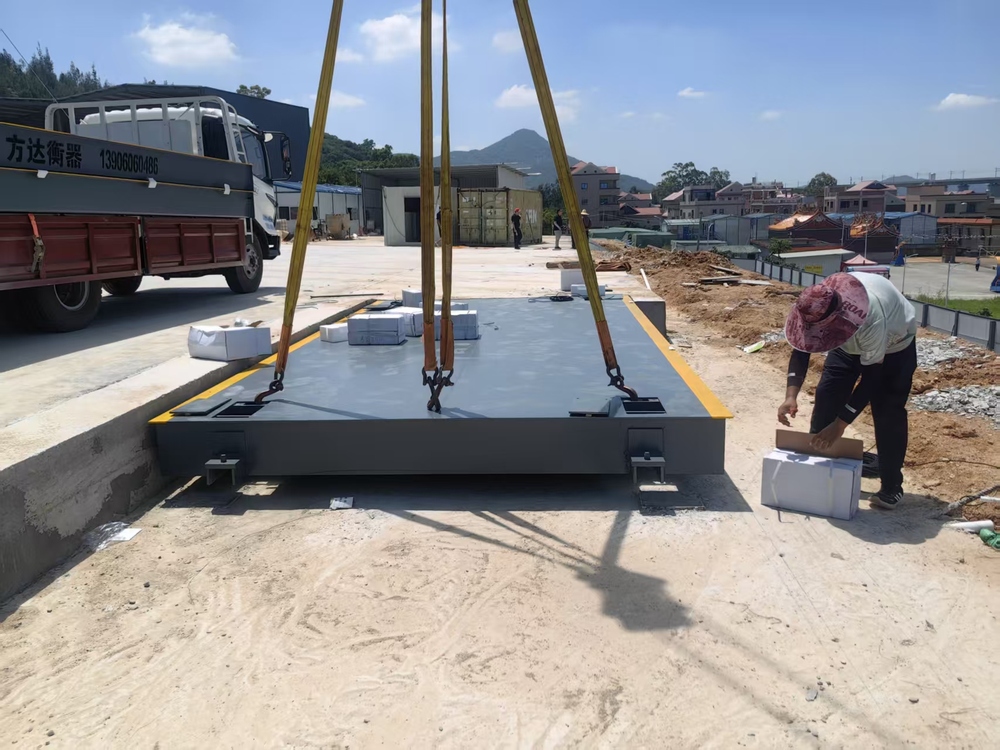
3. Product Highlights
3 × 18 m Platform for Heavy-Duty Trucks
The 18-meter platform length can accommodate a range of long commercial vehicles, depending on their overall dimensions and axle configuration.
The platform size should be selected based on the actual vehicles to be weighed, their wheelbase, axle spacing, and the required weighing procedure.
80–100 Ton Capacity Options
The weighbridge can be configured for an 80-ton or 100-ton rated capacity.
The appropriate capacity depends on the maximum gross vehicle weight and the expected loading conditions. The rated capacity should not be selected solely according to payload.
Electronic Weighing System
The electronic weighing system includes load cells, a weighing indicator, junction components, and related electrical connections according to the selected configuration.
The system converts the load applied to the platform into a weight reading for vehicle weighing and weight management.
U-Beam Steel Platform Structure
A U-Beam steel structure can be considered for the platform design. The final structural configuration depends on the capacity, platform dimensions, loading conditions, and engineering requirements.
Flexible Installation Options
The weighbridge can be designed for:
Pit-type installation
Pitless installation
The installation method should be selected according to site conditions, drainage, civil construction requirements, available space, and vehicle traffic.
Optional Weighing Automation
For projects requiring higher operating efficiency, optional systems may include:
RFID vehicle identification
License Plate Recognition (LPR)
Traffic lights and barriers
CCTV monitoring
Unattended weighing system
Weighing management software
Data connection to compatible management systems
Availability depends on the project configuration.
4. Technical Specifications
3 × 18 m Electronic Weighbridge
Parameter | Specification |
|---|---|
Product Type | Electronic Weighbridge / Truck Scale |
Platform Size | 3 m × 18 m |
Rated Capacity | 80 t / 100 t |
Weighing Type | Electronic weighing |
Platform Structure | U-Beam steel structure, subject to model confirmation |
Steel Material | Q235B, subject to confirmation |
Load Cell Class | C3 / C6 options, subject to configuration |
Load Cell Quantity | To be confirmed according to the design |
Weighing Indicator | Electronic weighing indicator |
Installation Type | Pit-type / Pitless |
Platform Design | Customized according to project requirements |
Accuracy Class | Subject to the applicable system configuration and local metrological requirements |
Load Cell Protection | IP rating to be confirmed for the selected component |
Operating Environment | To be confirmed according to site conditions |
Automation | Optional RFID, LPR, traffic control, and weighing software |
Power Supply | To be confirmed according to the destination market |
Application | Mining, logistics, construction, industrial weighing, material handling |
OEM / ODM | Available subject to project requirements |
Technical note: The above table is a product configuration reference. Final specifications, structural design, load cell quantity, accuracy class, and certification requirements should be confirmed in the official quotation and technical drawings.
5. Product Structure and Components
Steel Weighbridge Platform
The steel platform supports the vehicle during weighing. Its structural design should be suitable for the specified capacity and vehicle loading conditions.
The platform configuration may be customized according to the installation site and project requirements.
Load Cells
Load cells are installed at designated support points under the platform. They detect the load applied by the vehicle and convert it into electrical signals.
The number, capacity, and class of load cells depend on the engineering design.
Weighing Indicator
The weighing indicator receives signals from the load cells and displays the weight reading. Depending on the selected model, it may support data output and connection to weighing management software.
Junction Box and Electrical Connections
The junction box connects the load cells and helps manage the signal connections within the weighing system. The exact configuration depends on the selected components.
Optional Accessories
Optional accessories may include:
Printer
Weighing software
RFID reader
License plate recognition camera
Traffic lights
Vehicle barriers
CCTV cameras
Remote display
Accessory availability and compatibility should be confirmed before ordering.
6. Pit-Type and Pitless Installation
Pit-Type Electronic Weighbridge
A pit-type weighbridge is installed in a prepared foundation pit so that the weighing platform can be positioned at ground level.
Potential advantages:
Ground-level vehicle access
No long access ramps required
Suitable for sites with sufficient civil construction capability
Installation considerations:
Foundation and pit construction
Drainage
Maintenance access
Local soil and groundwater conditions
Pitless Electronic Weighbridge
A pitless weighbridge is installed on an elevated foundation and generally requires access ramps.
Potential advantages:
Easier access to some components
Drainage may be simpler to manage
Suitable for sites where a deep foundation pit is not preferred
Installation considerations:
Ramp length and slope
Available space
Vehicle maneuvering
Foundation height and drainage
The appropriate installation method depends on the site layout and civil engineering design.
7. Applications
Mining and Quarry Operations
Used for weighing trucks transporting minerals, aggregates, stones, and other bulk materials.
Logistics and Transportation
Supports vehicle weight recording, goods dispatch, receiving operations, and transport management.
Construction and Building Materials
Suitable for weighing trucks carrying sand, gravel, cement-related materials, and other construction supplies.
Industrial Plants
Used to monitor incoming raw materials and outgoing products as part of plant weighing procedures.
Material Handling and Bulk Transport
Supports weighing operations involving heavy-duty vehicles and bulk cargo.
8. How to Select an 80–100 Ton Truck Scale
When selecting a 3 × 18 m electronic weighbridge, consider the following factors:
Rated capacity: Confirm whether 80 tons or 100 tons is suitable for the maximum gross vehicle weight.
Vehicle dimensions: Check the truck length, width, wheelbase, and axle arrangement.
Platform size: Confirm that the 3 × 18 m platform meets the vehicle and weighing requirements.
Installation type: Select pit-type or pitless installation according to site conditions.
Weighing requirements: Confirm the required accuracy class and local metrological regulations.
Environmental conditions: Consider moisture, dust, temperature, and possible corrosive exposure.
Automation requirements: Decide whether manual, semi-automatic, or unattended weighing is required.
Data management: Confirm whether the system needs printing, software, or integration with other systems.
Fangda can review the project requirements and recommend a suitable weighbridge configuration.
9. Frequently Asked Questions
1. What is the platform size of this electronic weighbridge?
The platform size is 3 meters wide and 18 meters long. The suitability of this size should be confirmed according to the dimensions and axle configuration of the vehicles to be weighed.
2. Is this weighbridge available in 80-ton and 100-ton capacities?
The system can be configured for an 80-ton or 100-ton rated capacity, subject to the selected model and project requirements.
3. What is an electronic weighbridge?
An electronic weighbridge is a truck weighing system that uses load cells to convert the load applied to the platform into electrical signals. The weighing indicator processes the signals and displays the vehicle weight.
4. What is the U-Beam structure?
U-Beam refers to a structural design using steel beams with a U-shaped cross-section. The final structure depends on the platform design, rated capacity, and engineering requirements.
5. What load cells can be used?
C3 or C6 load cells may be considered according to the system configuration and applicable weighing requirements. The final load cell model and quantity should be confirmed in the technical specification.
6. Can the weighbridge be installed without a pit?
Yes. A pitless installation can be considered. It generally uses an elevated foundation and access ramps.
7. Can the weighbridge be installed in a pit?
Yes. A pit-type installation can be considered where the site conditions and civil construction design allow it.
8. Is the 3 × 18 m platform suitable for long trucks?
The 18-meter platform may be suitable for certain long trucks. Vehicle length, wheelbase, axle arrangement, and weighing procedure should be checked before selecting the platform.
9. Can the platform dimensions be customized?
The platform design can be evaluated according to the project requirements. Any change in dimensions should be confirmed with the engineering team.
10. Can the weighbridge be used in mining applications?
It can be considered for mining and quarry operations. The structure, capacity, environmental protection, and installation should be selected according to the actual operating conditions.
11. Can an unattended weighing system be added?
An unattended weighing system may be integrated as an option. It can include vehicle identification, traffic control, cameras, and weighing management software, depending on the project.
12. Can RFID or license plate recognition be integrated?
RFID and License Plate Recognition (LPR) can be considered as optional vehicle identification functions. Compatibility depends on the selected system.
13. Does the system include weighing software?
Weighing software may be included or supplied as an option, depending on the selected configuration. Software functions should be confirmed before ordering.
14. Can the weighing data be connected to an ERP system?
Integration may be evaluated according to the software, communication interfaces, and requirements of the customer’s ERP system. Compatibility should be confirmed before implementation.
15. What information is needed for a quotation?
Useful information includes the required capacity, vehicle type, platform dimensions, installation method, site conditions, destination country, and automation requirements.
16. Can Fangda provide OEM or ODM services?
OEM or ODM requirements can be evaluated according to the project scope and agreed technical specifications.
17. What is the difference between an 80-ton and a 100-ton weighbridge?
The main difference is the rated capacity. The appropriate model should be selected according to the maximum gross vehicle weight, loading conditions, and applicable requirements.
18. Does a higher-capacity weighbridge always provide better performance?
No. The rated capacity should match the application. A higher capacity is not necessarily the most suitable option for every weighing project.
19. What should be considered before installation?
The foundation, drainage, access ramps, platform alignment, electrical connections, and maintenance access should be considered. Installation should follow the approved technical drawings.
20. How can I request a quotation for this weighbridge?
Contact Fangda with the required capacity, vehicle details, platform size, installation method, destination country, and any automation requirements. The configuration can then be reviewed for your project.


英文表单
NAME /COMPANY:*
TEL :*
E-MAIL*
Describe the requirements:*


