


Fujian Zhongli Construction Group – 3 × 12m, 100T Unattended Weighing System
100 Ton Unattended Weighing System for Fujian Zhongli Construction Group
Project Overview
Fujian Zhongli Construction Group is involved in municipal infrastructure construction, where reliable truck weighing plays an important role in material transportation, site management, and project cost control.
For construction companies handling frequent vehicle movements and material deliveries, traditional manual weighing can create operational challenges. A weighing station that depends heavily on staff attendance requires continuous personnel coordination and may increase the risk of recording errors during daily operations.
To address these challenges, Fujian Zhongli Construction Group adopted a 3 × 12-meter, 100-ton unattended weighing system supplied by Fujian Fangda Weighing Apparatus Co., Ltd.
The project focused on improving the weighing process through an unattended operating approach, reducing dependence on manual weighing procedures, and supporting more consistent weighing data management.

1. Customer Background: Weighing Requirements in Municipal Infrastructure Projects
Municipal infrastructure construction involves the transportation and handling of various construction materials. Trucks regularly enter and leave project sites to deliver materials or transport construction-related loads.
Accurate weighing information is important for several operational purposes:
Monitoring incoming and outgoing material quantities.
Maintaining reliable vehicle weighing records.
Supporting material management and cost accounting.
Improving coordination between transportation and site operations.
Reducing unnecessary manual work at the weighing station.
For Fujian Zhongli Construction Group, the traditional manual weigh-station model presented two major concerns: relatively high labor costs and potential inaccuracies in weighing data.
The company therefore needed a weighing solution that could support more efficient daily operations while maintaining reliable truck weight measurement.
2. Project Challenges: Limitations of Traditional Manual Weighing
Manual weighing stations often require operators to participate in vehicle identification, weighing procedures, data recording, and transaction management.
When vehicle traffic becomes frequent, these procedures can place additional pressure on weighing personnel.
The main challenges identified in this project included:
High Labor Requirements
Traditional weighing operations depend on personnel being available at the weighing station. This creates ongoing staffing requirements and increases operating costs.
Potential Data Recording Errors
Manual information entry and record handling can introduce inconsistencies. Incorrect vehicle information or weight records may affect subsequent material reconciliation and management.
Less Efficient Weighing Management
When weighing information is processed manually, it can be more difficult to maintain consistent operating procedures and organize records efficiently.
These challenges highlighted the need for a more automated weighing management approach.
3. Fangda's Solution: 3 × 12m, 100T Unattended Weighing System
Fujian Fangda supplied a 3 × 12-meter electronic weighbridge with a rated capacity of 100 tons, configured as an unattended weighing system for the project.
The solution combines truck weighing equipment with an unattended operating approach to reduce reliance on traditional manual weighing procedures.
The 3-meter-wide and 12-meter-long weighing platform provides the physical weighing interface for vehicles using the system. Its 100-ton rated capacity is the confirmed project specification.
The unattended system concept is intended to make routine weighing operations more standardized and support improved management of weighing information.
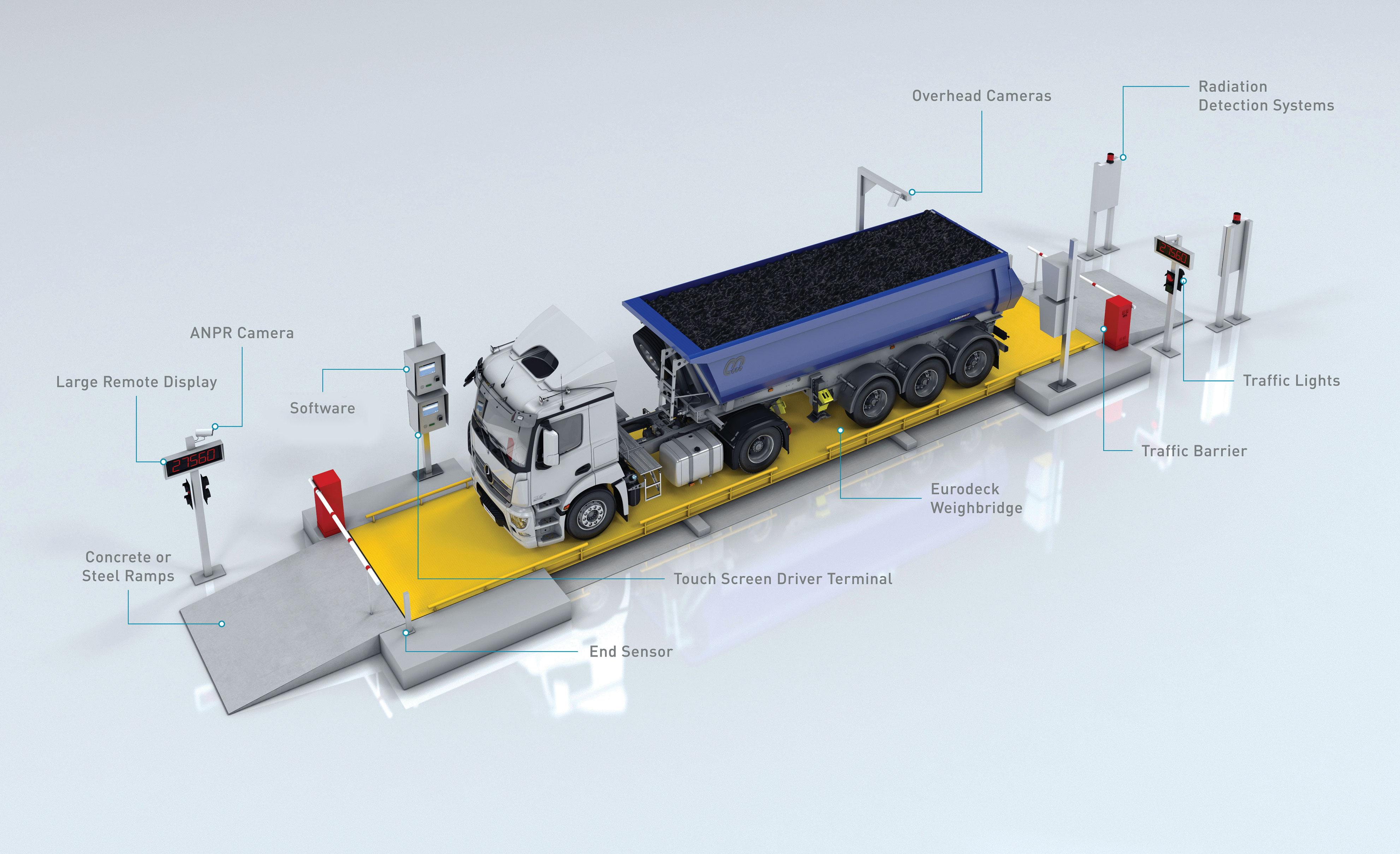
The final automation functions depend on the actual project configuration. Equipment such as vehicle identification devices, access-control barriers, traffic lights, cameras, and weighing management software should only be listed as installed components when confirmed by the project equipment records.
4. How an Unattended Weighing System Supports Construction Site Management
An unattended weighing system can help construction companies improve the organization of truck weighing operations.
Depending on the installed configuration, a typical automated weighing workflow may include:
Vehicle approaches the weighing station.
The system identifies the vehicle or receives the relevant vehicle information.
The vehicle enters the weighing platform according to the operating procedure.
The weighing equipment measures the vehicle's weight.
The weighing result is recorded by the configured weighing management system.
The vehicle proceeds according to the site's traffic-control procedure.
The specific identification method, operating sequence, and automation devices should be determined by the supplied system configuration.
For construction projects, the objective is not simply to replace a manual weighing instrument. It is to improve the consistency of weighing operations and make weighing information easier to manage.
5. Project Results and Operational Value
The 3 × 12-meter, 100-ton unattended weighing system provides Fujian Zhongli Construction Group with an automated weighing solution for its municipal infrastructure operations.
The main value of this project can be understood in three areas.
Reduced Dependence on Manual Operations
An unattended weighing approach helps reduce the need for continuous manual involvement in routine weighing procedures, supporting more efficient use of personnel.
Improved Weighing Data Management
A properly configured automated weighing system can help standardize weighing records and reduce errors associated with manual information handling.
Better Support for Construction Material Management
Reliable vehicle weight records provide useful information for material transportation management, quantity verification, and project-related accounting.
The system provides a foundation for more organized weighing operations at construction sites where truck movements and material transportation need to be monitored.
6. Why Choose Fangda for Construction Site Weighbridges?
Fujian Fangda Weighing Apparatus Co., Ltd. manufactures electronic weighbridges and truck scales for industrial, logistics, construction, mining, and other heavy-duty applications.
For construction companies, selecting a weighbridge involves more than choosing a rated capacity. The platform dimensions, vehicle types, site conditions, foundation design, weighing requirements, and automation functions all need to be considered.
Fangda can work with customers to evaluate these requirements and develop a suitable weighing solution.
Whether a project requires a conventional electronic truck scale or an unattended weighing system, the equipment and configuration should be matched to the actual operating environment.
7. Conclusion
The Fujian Zhongli Construction Group project demonstrates the application of a 3 × 12-meter, 100-ton unattended weighing system in municipal infrastructure construction.
By adopting an unattended weighing approach, the project addresses the operational challenges associated with traditional manual weighing, particularly labor requirements and weighing data management.
For construction companies seeking to improve truck weighing procedures, an appropriately configured unattended weighbridge can provide a practical foundation for more standardized and efficient site operations.
Looking for a 100-ton unattended weighbridge for your construction project? Contact Fujian Fangda to discuss your platform dimensions, vehicle requirements, site conditions, and automation needs.
Frequently Asked Questions
1. What is the capacity of the weighbridge installed for Fujian Zhongli Construction Group?
The project uses a 100-ton unattended weighing system designed for truck weighing operations in municipal infrastructure construction.
2. What are the dimensions of this weighbridge?
The confirmed platform dimensions are 3 meters wide and 12 meters long (3 × 12m).
3. What is an unattended weighing system?
An unattended weighing system is an automated truck weighing solution designed to reduce the need for operators to perform every weighing procedure manually. Depending on its configuration, it may integrate vehicle identification, weighing equipment, traffic control, and weighing management software.
4. Why did Fujian Zhongli Construction Group choose an unattended weighing solution?
The company faced challenges with its traditional manual weighing model, particularly high labor costs and potential inaccuracies in weighing data. The unattended solution was introduced to improve weighing management.
5. Is a 100-ton weighbridge suitable for construction projects?
A 100-ton weighbridge can be suitable for construction sites handling heavy trucks and material transportation, provided that its rated capacity, platform dimensions, and technical configuration match the actual vehicles and operating conditions.
6. Can a 3 × 12m weighbridge accommodate different truck types?
It can weigh vehicles whose dimensions and axle configurations are compatible with the platform and the applicable weighing requirements. The vehicle fleet should be evaluated before selecting the platform length.
7. Does an unattended weighbridge require vehicle recognition equipment?
Not necessarily. Vehicle recognition equipment is an optional configuration in many unattended weighing solutions. The required identification method depends on the site's management procedures and project requirements.
8. Can an unattended weighbridge reduce labor costs?
An unattended weighing system can reduce dependence on personnel performing routine weighing procedures. The actual labor savings depend on vehicle traffic, automation level, operating procedures, and the site's staffing arrangement.
9. Can the weighing system record truck weight data automatically?
Automated data recording can be supported when the weighing equipment is connected to compatible weighing management software. The specific recording and reporting functions depend on the installed configuration.
10. Can an unattended weighing system be connected to ERP software?
ERP integration may be possible when the weighing software and the customer's ERP system support compatible interfaces. The required interface and data fields should be confirmed during project planning.
11. What should be considered before installing a 100-ton weighbridge?
Important considerations include vehicle dimensions, maximum axle loads, traffic volume, platform length, site conditions, foundation design, drainage, power supply, and local weighing regulations.
12. Does Fangda provide customized unattended weighing solutions?
Fangda can discuss project-specific requirements, including weighbridge capacity, platform dimensions, weighing procedures, and automation functions, to develop a suitable configuration.
13. Is a foundation required for a 3 × 12m weighbridge?
Foundation requirements depend on whether the installation is pit-type or pitless, as well as local soil conditions, drainage, and the engineering design. A site-specific foundation plan should be confirmed before construction.
14. How can I request a quotation for a 100-ton unattended weighbridge?
Provide the required capacity, platform dimensions, vehicle types, installation location, foundation preference, and desired automation functions. Fangda can use this information to prepare a project-specific quotation.

英文表单
NAME /COMPANY:*
TEL :*
E-MAIL*
Describe the requirements:*


